
Submitted by Dr S. Patel on 13 June 2017

This time in our Health by Numbers/Medical Tests series, Dr Shital Raval takes a look at the importance of Calcium levels in the metabolic panel.

Read the previous parts on Sodium Levels, Potassium Levels and Chloride Levels

CALCIUM:

Calcium is an important component of our bones, teeth, nerve cells and organs such as heart and kidneys. A blood calcium test is ordered if there are any symptoms of any bone or neurological disorders, kidney stones etc or can be a part of a Comprehensive Metabolic Panel.

Calcium found in the body can be in free or bound state which is usually very balanced. The calcium test indicates the amount of free calcium present in the blood. Calcium is regulated by the parathyroid hormone (PTH) which is secreted by the Parathyroid glands. Increased PTH causes more calcium to be released in the blood.

If calcium is found to be abnormal, more testing is required to diagnose the underlying condition. These tests commonly include measurement of urine calcium, phosphorus, ionised calcium, magnesium, vitamin D, parathyroid hormone(PTH) and PTH related peptide. Ionised calcium test is used for patients who have lost balance of free and bound calcium; such patients either are undergoing surgery, blood loss, blood disorders, on IV fluids etc.

Calcium monitoring is needed for patients who are on calcium or vitamin D supplements, have any kidney disorders, and suffer from cancer.

The corrected total serum calcium concentration is normally 8.5-10.2 mg/dL.

Low calcium levels:

Lower than normal levels or Hypocalcemia may be due to:

  • Insufficient calcium in the diet
  • Decreased levels of vitamin D
  • Parathyroid gland abnormality such as poor functioning(hypoparathyroidism) or resistance.
  • Magnesium deficiency
  • Increase in phosphorus levels
  • Pancreatitis
  • Kidney failure

High calcium levels :

Higher than normal levels or Hypercalcemia may be due to:

  • Excess vitamin D intake
  • Increase in parathyroid function (hyperparathyroidism)
  • Cancer especially when it has spread to the bones
  • Prolonged immobility (when bones don’t bear weight, they release calcium)
  • Certain drugs such as lithium, thiazide diuretics etc
  • Kidney transplant
  • Diseases such as TB, Sarcoidosis, AIDS etc.

Foods that contain calcium :

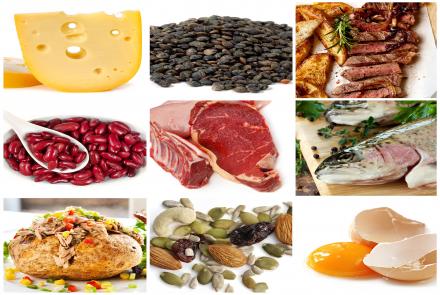
  • Dairy products like milk, cheese and yogurt.
  • Sardines with the bones
  • Vegetables like broccoli, bok choy, turnips etc.
  • Dark greens like spinach, kale, watercress, collard greens etc.

Read the previous parts on Sodium Levels, Potassium Levels and Chloride Levels

Changed
13/Jun/2017

Stories

  • Stop Your Child Smoking
    Why your child is at risk and what to say to him or her. By Dr Shital Raval Patel. When you think of a smoker, you don’t think of a 10-year-old. But 67% of smokers in India start the tobacco habit between the ages of 9 and 15. According to the Global Youth Tobacco Survey (2006), more than one third of students aged 13 to 15 years (36.8%) reported initiating tobacco use before the age of 10 (Sinha et al., 2008). This could be cigarettes, bidis (which have three times the amount of nicotine and…

  • Just say No to Tobacco
    World No Tobacco Day is on May 31. Cancer survivor Vandana Gupta (VG), the founder of V Care, a support service for cancer patients and their families in India, talks about the urgent need to protect your kids and family members from the widespread scourge of tobacco use. Plus, what to say to kids who think smoking is cool.  PE: Your organisation, V Care, offers support to different types of cancer patients. What are the specific challenges pertaining to …
  • Turning a home into a hospital
    The idea of hospice care in my home overwhelmed me. I was very afraid of witnessing her physical deterioration and her death. At age 99, she was diagnosed with pancreatic cancer. Because of her advanced age, there was little to do except make the last months of her life comfortable. Her doctor arranged for home hospice care. But part of me wanted to place her in a nursing home.  When would she no longer be able to bathe herself ? When would she be bedridden ? Incontinent. Read on about how…
  • Kidney Donation and Gender Disparity
    A widely prevalent skew in kidney donation — gender disparity — is just as shocking as economic disparity, when the bald numbers are scanned. Doctors at Narayana Health, a large Bangalore-headquartered hospital chain run by well-known cardiac surgeon Devi Shetty, found that an overwhelming 65 per cent of kidney donors in its hospitals are women, whereas 70 per cent of kidney recipients are male. Kidney donation is a medically proven safe process that has no bearing on a person’s lifespan. Yet,…
  • Foods that increase Cancer risk
    1. Processed and Red Meat: contribute to colorectal cancer, the most common cancer in Singapore and one of the top 5 cancers in India as well as to stomach, breast, endometrium, oesophagus cancer. Regular consumption, even in small quantities increase your risk because of presence of nitrates and nitrites. 2. Cured and Salted Fish: Preserved fish are high in nitrates and nitrites and increase the risk of nasopharyngeal cancer.  Opt for oily fish like salmon, sardines and tuna which are…
  • Student aces A-level exams despite cancer
    He was diagnosed with colon cancer in his first year of junior college, which kept him away from school for four months. But that did not stop Hwa Chong Institution student Ng Yi Pin from catching up with his studies. He also managed to find the time and energy to tutor his older twin brother, Yi Yang, who studied in the same school. Yesterday, the 18-year-old scored eight As for his A levels. Yi Yang also made a marked improvement from his usual results. Yi Pin was in Secondary 4 when he…
  • Colon cancer at 27 did not stop her aiming for 5Km
    Choo Mei Sze from Kuala Lumpur, Malaysia surprised doctors with her condition and then even more with her fighting spirit. The TV host/columnist/blogger/emcee shares her tips for coming back stronger than ever.  Please tell us a bit about your condition. I had stage 1b/2 colon cancer. The tumour was 1/3 the size of my colon and I had to remove 2/3 of my rectum and 12 cm of my colon, total of 18 lymph nodes. I had complications during the surgery as I had low blood…
  • Oliver Sacks on learning he has terminal cancer
    Oliver Sacks, professor of neurology at the New York University of Medicine. He had an ocular melanoma (a rare tumor of the eye), the treatment of which with lasers and radiations left him blind in that eye. On discovering that he had multiple metastases in the liver, he wrote this lovely piece.   "It is up to me now to choose how to live out the months that remain to me. I have to live in the richest, deepest, most productive way I can" "Above all, I have been a sentient being, a thinking…
  • A significant number of cancer patients are treated by non-specialists
    On the occasion of World Cancer Day, Dr V Shanta, Chairperson of Adyar Cancer Institute, Chennai, a doyenne in her field, talks to PatientsEngage about the challenges of tackling cancer in India. “India has state of the art facilities but it does not reach everyone.”  PE: There are many differing views on how frequently one should have mammograms. You have said that annual mammograms are unnecessary.  Dr. Shanta: I believe that we do follow the general guidelines laid…
  • Don't Believe the Hype - 10 Persistent Cancer Myths Debunked
    Driven by the evidence, not by rhetoric or anecdote, we describe what the reality of research actually shows to be true. Myth 1: Cancer is a man-made, modern disease While it’s certainly true that global lifestyle-related diseases like cancer are on the rise, the biggest risk factor for cancer is age. Myth 2: Superfoods prevent cancer Blueberries, beetroot, broccoli, garlic, green tea… the list goes on. Despite thousands of websites claiming otherwise, there’s no such thing…